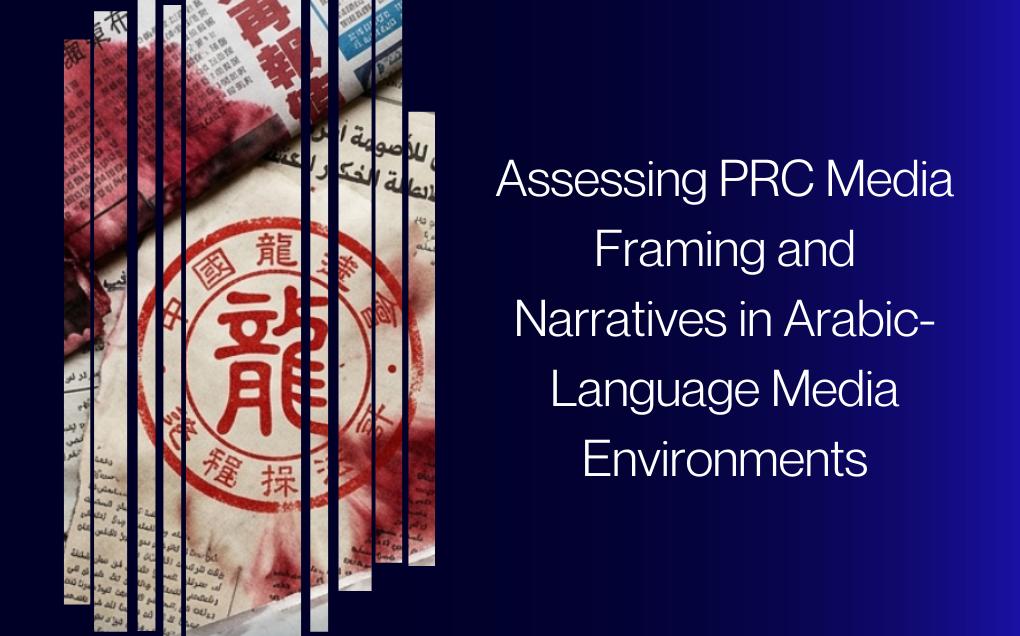
This research examines how the People’s Republic of China (PRC) uses Arabic-language media to project influence and shape narratives in Arabic-speaking regions. It finds that China is most effective at presenting itself as a practical development partner, particularly through coverage of infrastructure and Belt and Road projects, while its efforts to challenge Western influence are only partly successful and its promotion of global leadership narratives gains little traction. Content tied to tangible benefits or geopolitical competition—such as ports, logistics, and conflict mediation—spreads more widely, whereas abstract ideological themes resonate poorly. Although PRC media produce large volumes of content, local and pan-Arab outlets selectively adopt and often reframe it, frequently embedding it within multipolar or anti-Western narratives. Overall, China’s media strategy appears pragmatic and results-driven, but limited in its ability to shape broader value-based discourse, with implications extending to Arabic-speaking audiences beyond the region.
15th April 2026
Assessing PRC Media Framing and Narratives in Arabic-Language Media Environments